

May 22, 2026 | 5 min read
Everything about Non Convertible Debenture (NCD)
Companies have multiple options to raise funds, primary amongst which are the issue of shares and debentures. Whilst the former dilutes the overall ownership of the company, the latter creates debt for the company. Companies often opt for the second option i.e., issuing of debentures when they do not want to part or dilute their equity shareholding. There are two types of debentures a company can issue-
Convertible Debentures
Non Convertible Debentures.
What are Non Convertible Debentures (NCDs)?
Non Convertible Debentures (NCDs) cannot be converted into shares. As is the case with all debentures, NCDs fall into the category of debt instruments and generate a fixed income for the debenture holder. Each Non Convertible Debenture has a predetermined rate of interest and a fixed maturity date. The interest on NCDs can either be paid with the principal amount on the maturity date or at specific intervals, which may be monthly, quarterly, or yearly.
NCDs are further divided into secured NCDs and unsecured NCDs. Secured NCDs are backed by a collateral, which makes them safer than unsecured NCDs. In case of non-payment of principal or interest on maturity, unitholders have the option to sell the collateral and recover their principal amount or interest payments. Since the income and principal is more or less guaranteed, secured NCDs carry a lower rate of interest as the risk is lower compared to unsecured NCDs.
In order to apply for a particular company's Non Convertible Debentures, you have to wait for said company to launch a public issue of NCDs. Once such an issue is operational, you can apply for the required number of NCDs. You can also buy already issued NCDs from the open market at prevailing market price.
Features of Non Convertible Debentures
Parameter | Features of NCDs |
|---|---|
Interest Rate | Non Convertible Debentures have a fixed rate of interest which usually ranges between 7% to 9%, provided you hold the instruments till their maturity date. Non-secured NCDs generally have a higher rate of interest than secured NCDs. |
Taxation upon Sale | Although there are no tax implications associated with the purchase of a Non Convertible Debenture, the sale thereof attracts a tax.
|
Credit Rating of the issuing company | The security of a Non Convertible Debenture is directly proportional to the credit rating of the company issuing the instrument. The higher the credit rating, the more secured the NCD is. |
Capital Adequacy Ratio | A company's Capital Adequacy Ratio is an indicator of its long term solvency and ability to service its debt. Therefore, the higher this ratio, the more secured the NCDs. |
What are the benefits of investing in Non Convertible Debentures?
Fixed Income
One of the primary benefits of investing in Non Convertible Debentures is that they offer you a fixed income. This income is usually higher than bank deposit rates. You can choose to receive the interest payouts from NCDs in one lump-sum along with the principal amount at maturity or opt for regular interest income on a monthly, quarterly, or annual basis.
Low Risk
If you are mindful of buying Non Convertible Debentures of only highly rated companies, then you can be assured of minimal risk of default. It is advisable to opt for secured NCDs.
Liquidity
Non Convertible Debentures carry a high degree of liquidity. These instruments can be easily traded in the open market. Not only can you engage in the outright sale of NCDs in the stock market, you can also opt for options contracts to secure your position in such investments.
No Tax Burden
Another benefit of investing in NCDs is that there is no upfront tax on the purchase of these instruments (under Section 193 of the Income Tax Act, 1961).
How does NCD Taxation work?
As discussed above, there is no tax to be paid on the purchase of Non-Convertible Debentures. However, the sale of NCDs has some tax implications.
Tax On The Sale Of NCDs Within A Year
The sale of Non Convertible Debentures within a year of their purchase attracts Short Term Capital Gain Tax at the applicable slab rate.
Tax On The Sale Of NCDs Post One Year But Before Maturity
The sale of a Non Convertible Debenture a year after its purchase is subject to a Long Term Capital Gain Tax of 20% (with indexation).
Tax On The Interest Income From NCDs
The interest income from Non Convertible Debentures is taxed akin to income from fixed income securities. This income is categorised as 'income from other sources'.
Unlike NCDs, which have no tax or cost associated at the time of purchase, you have to pay brokerage when you buy stocks. The higher the brokerage charged, the lower is your take-home profit. This is why investing with trading platforms like m.Stock is the recommended choice. With ₹10 brokerage on all trades with m.Stock you take home majority of your profits as you can trade with less brokerage. Additionally, you can invest in a host of products like mutual funds, exchange traded funds, NCDs etc seamlessly with a single m.Stock Demat account.
An Income Tax Calculator helps you estimate how much tax you need to pay based on your income, deductions, and exemptions. Use our Income Tax Calculator to understand your tax liability better and plan smarter to save more.
More Related Articles

How Rising Oil Prices Impact Stock Market Investments
 October 9, 2026 | 0 mins read
A petroleum price hike, driven by rising global crude oil prices, can have far-reaching consequences for the economy and financial markets worldwide. As India imports over 88% of its crude oil requirements, understanding the impact of rising oil prices on stock market investments is essential for investors.
Understanding the meaning and impact of a current account deficit on an economy
October 9, 2026 | 0 mins read
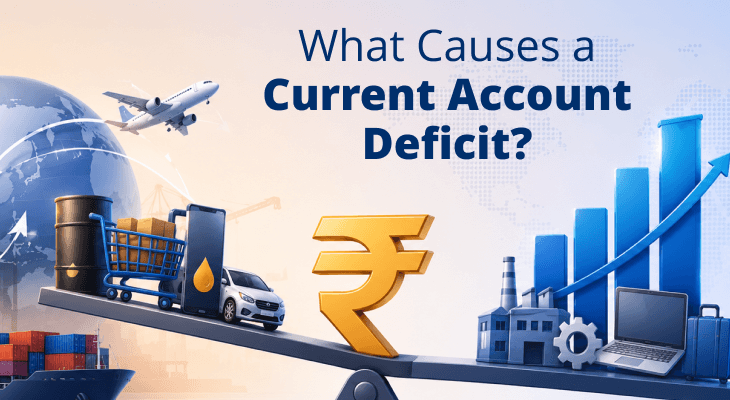
The current account is an important component of a country’s balance of payments. A current account deficit occurs when a country’s total payments to the rest of the world exceed its total earnings from abroad. These payments include imports of goods and services, investment income paid to foreign investors, and current transfers. These earnings include receipts from exports of goods and services, income earned from overseas investments, and current transfers such as remittances. A country’s current account deficit is generally expressed as a percentage of its gross domestic product (GDP).

Revenge trading meaning explained: Causes, impact, and how to avoid it
October 9, 2026 | 0 mins read
in revenge trade, they are often driven by emotions such as anger, frustration, fear, or disappointment rather than sound analysis. In the process, they overlook carefully planned trading strategies designed around their financial goals, investment horizon, and risk appetite. More often than not, revenge trading results in further losses, creating a vicious cycle that becomes increasingly difficult to escape.
FAQ
NCDs are issued by Corporates, whereas Bonds are issued by Government entities. In most cases, NCDs offer a higher interest rate than Bonds which are secured while NCDs can be secured or unsecured.